
Logistics Manager
Updated on 27 March 2026
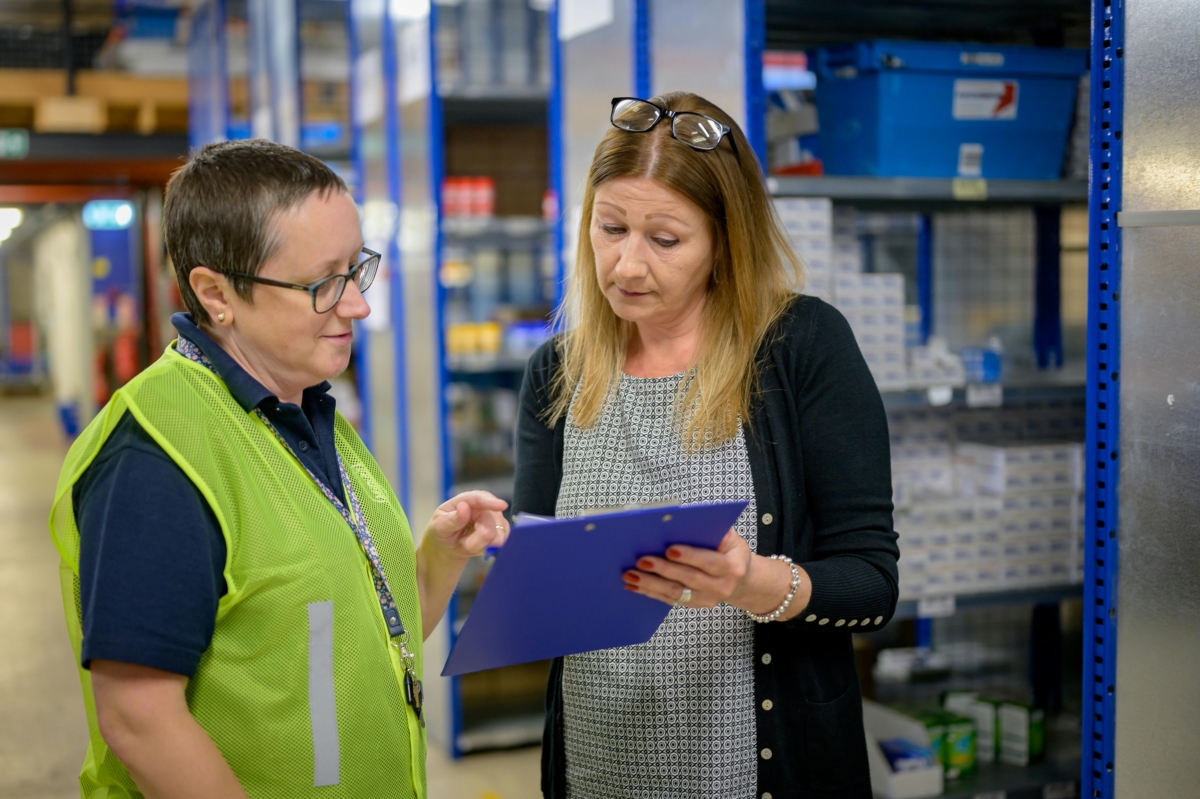
The logistics manager oversees all goods flows, from the receipt of raw materials to the delivery of finished products. This strategic role is found across all sectors: manufacturing, retail, e-commerce, food and drink, and pharmaceuticals.
Also known as: Supply Chain Manager, Logistics Manager, Logistics Operations Manager, Logistics Operations Manager, Head of Logistics
What is a logistics manager?
The logistics manager is the professional who manages the entire flow of goods within a company, from the receipt of raw materials to the delivery of finished products. According to APEC, the median salary is around €46,000 gross per annum, with 80% of profiles between €33,000 and €60,000 (Source: APEC, 2026). As the orchestrator of the supply chain, they optimise costs, lead times and quality of service while coordinating warehouse teams, carriers and suppliers.
This strategic position can be found in all business sectors: manufacturing industry, mass distribution, e-commerce, food processing, pharmaceuticals and defence. At LID Consulting, a specialist transport and logistics recruitment consultancy, we’ve been helping companies to recruit these profiles for over 10 years.
Main tasks of the logistics manager
Flow and stock management
- Supervising the receipt, storage, order preparation and dispatch of goods
- Define and monitor stock management policy (turnover rate, safety stock, replenishment)
- Set up logistics performance indicators (KPIs): service rate, breakage rate, average delivery time, etc.
Organisation of transport and distribution
- Selecting and negotiating with carriers and logistics service providers (3PL, 4PL)
- Optimising transport plans to reduce costs and carbon footprint
- Coordinate deliveries to meet contractual deadlines and customer requirements
Management and continuous improvement
- Manage logistics teams (warehousemen, forklift drivers, order-pickers, transport coordinators)
- Deploy continuous improvement initiatives (Lean, 5S, Kaizen) within the warehouse
- Managing modernisation projects: WMS (Warehouse Management System), automation, mechanisation, etc.
Compliance and safety
- Ensuring compliance with health and safety standards and regulations (ADR, ICPE, customs)
- Ensuring product traceability throughout the supply chain
- Manage disputes and non-conformities with suppliers and customers
Skills of the logistics manager
Hard skills
- Mastery of WMS tools (SAP WM/EWM, Manhattan, Reflex) and TMS (Transport Management System)
- In-depth knowledge of Incoterms, customs regulations and transport law
- Ability to analyse logistics data and manage KPIs (advanced Excel, Power BI, dashboards)
- Knowledge of Lean Management and continuous improvement methods
- Budgetary concepts: drawing up and monitoring the logistics budget
Soft skills
- Leadership and the ability to bring together multidisciplinary teams
- Rigorous organisation and management of priorities under pressure
- Excellent negotiating skills with service providers and suppliers
- Responsiveness and ability to deal with unforeseen circumstances (shortages, delays, peaks in activity)
- Cross-functional communication with purchasing, production, sales and finance departments
Salary of a logistics manager in 2026
The remuneration of a logistics manager varies according to experience, company size and region. Here are the salary ranges on the French market (Sources: APEC 2026, Hellowork 2026, Robert Half 2026):
| Level of experience | Gross annual salary | Estimated net monthly salary |
|---|---|---|
| Junior (0-3 years) | 32 000 € – 38 000 € | 2 000 € – 2 400 € |
| Advanced (3-7 years) | 40 000 € – 52 000 € | 2 500 € – 3 250 € |
| Senior (7+ years) | 52 000 € – 65 000 € | 3 250 € – 4 060 € |
| Logistics Director | 65 000 € – 90 000 € | 4 060 € – 5 625 € |
In the Île-de-France region, salaries are on average 10% to 15% higher than in other regions. The pharmaceutical and e-commerce sectors generally offer the highest salaries (Source: Robert Half study, 2026).
Training to become a logistics manager
The job of logistics manager is accessible from Bac+3 (BUT/Licence Pro Logistique et Pilotage des Flux), but recruiters generally prefer Bac+5. The most sought-after courses :
- Master Supply Chain Management (ISLI Bordeaux, KEDGE, Panthéon-Sorbonne)
- Engineering degree with specialisation in logistics (INSA, Mines, Arts et Métiers)
- MBA Logistics and Transport
- BTS/DUT in Logistics and Transport Management plus at least 5 years’ experience in the field
APICS (CPIM, CSCP) or Green Belt Lean Six Sigma certification is an asset that sets you apart in the market. According to France Travail (ROME code N1301), 3 to 5 years’ experience in flow management are generally required before reaching this level of responsibility.
Career development for logistics managers
An experienced logistics manager can progress to the position of supply chain director, operations director (COO) or site director. You may specialise in supply chain consulting, international logistics (import/export) or the digital transformation of the supply chain. In large groups, cross-functional mobility into purchasing or industrial management is common.
Frequently asked questions
How much will a logistics manager earn in 2026?
In 2026, a logistics manager will earn between €32,000 and €65,000 gross per year, depending on experience. A junior profile (0-3 years) starts at around €32,000 – €38,000, while a senior profile (7+ years) reaches €52,000 – €65,000. In the Paris region, you can expect to pay 10 to 15% more (Sources: APEC, Robert Half, 2026).
What training do you need to become a logistics manager?
5 years’ higher education is preferred: Master’s degree in Supply Chain (ISLI, KEDGE, Panthéon-Sorbonne), engineering degree with a specialisation in logistics, or MBA in Logistics. A 3-year degree (BUT/Licence Pro) plus 5 years’ experience in the field is also an advantage. APICS certifications (CPIM, CSCP) are a plus.
What’s the difference between a logistics manager and a supply chain director?
The logistics manager manages day-to-day logistics operations (warehousing, transport, stocks) within a site or BU. The supply chain manager has a broader strategic vision: he or she manages the entire chain (purchasing, production, logistics, distribution) at company level. This is often the natural progression for logistics managers after 7 to 10 years’ experience.
What tools does a logistics manager use?
The main tools are : WMS (SAP EWM, Manhattan, Reflex) for warehouse management, TMS for transport, ERP (SAP, Oracle) for planning, Excel/Power BI for reporting and KPI management. The most advanced companies also use AI tools for demand forecasting and route optimisation.
Is logistics manager a job for the future?
Yes, it’s a job that’s in high demand. The growth of e-commerce, the challenges of decarbonising supply chains and the digitalisation of warehouses (robotisation, AI) are creating a growing need for profiles capable of managing these transformations. According to France Travail, ROME code N1301 will be one of the occupations in short supply in 2026.
Sources
Related careers

Logistics Consultant
35 000 € – 65 000 € gross/year
Logistics consultants work on a project basis with companies to optimise their supply chains. As…
View profile →
Supply Chain Manager
70 000 € – 120 000 € gross/year
The Supply Chain Director oversees a company’s entire supply chain, from the procurement of raw…
View profile →
Supply Chain Planner
35 000 € – 55 000 € gross/year
The supply chain planner is the specialist responsible for planning the flow of goods within…
View profile →