
Transport Manager
Updated on 27 March 2026
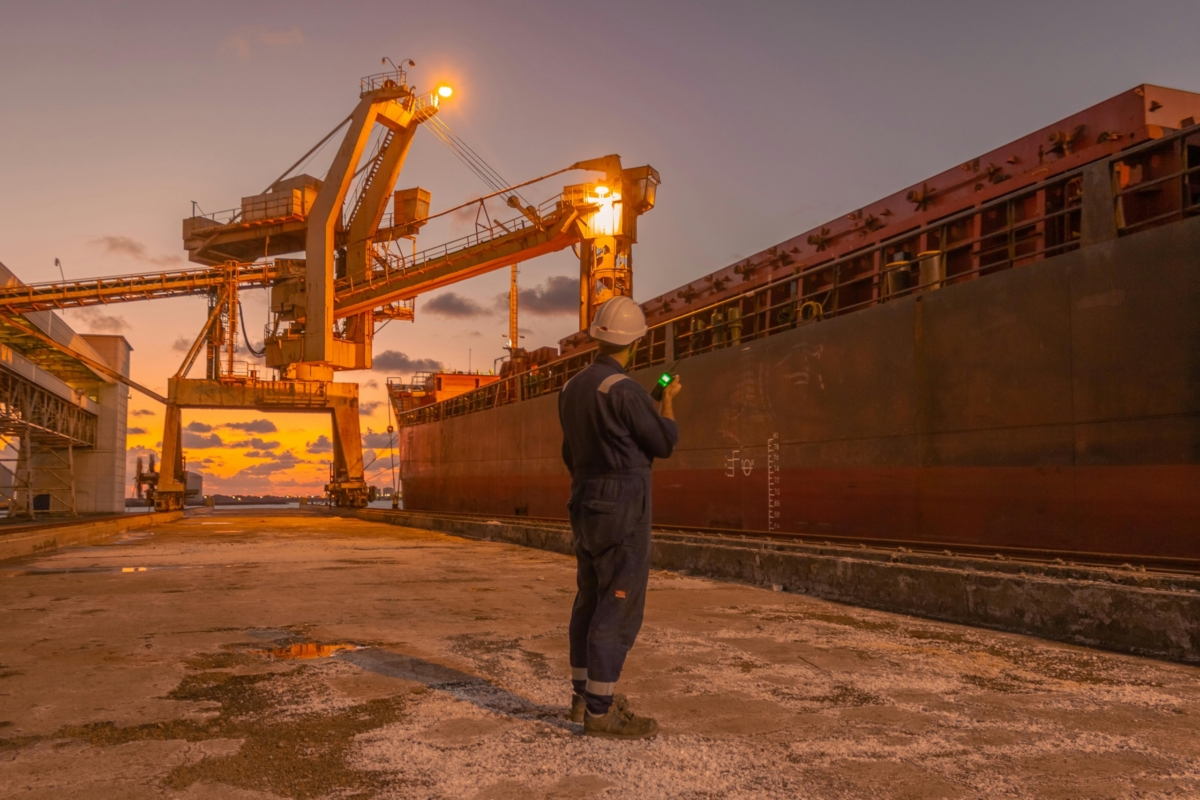
The transport manager organises and optimises all of a company’s transport operations. They oversee the flow of goods, negotiate with carriers, manage the vehicle fleet and ensure that deadlines, costs and regulations are met.
Also known as: Transport Manager, Transport Operations Manager, Head of Transport, Deputy Transport Director, Head of Transportation
What is a transport manager?
The transport manager is the professional responsible for managing all goods transport operations within a company or logistics service provider. He or she organises delivery flows, selects carriers, optimises costs and ensures that contractual deadlines are met. This is a key position in any organisation that sends or receives goods.
According to market data, transport managers earn between €36,000 and €60,000 gross per year, with a median of around €45,000 (Sources: APEC, Hellowork, 2026). The most experienced profiles in charge of large fleets or international operations can reach €70,000 to €80,000. At LID Consulting, a specialist transport and logistics recruitment consultancy, we recruit these profiles for companies of all sizes.
Main tasks of the transport manager
Transport organisation and planning
- Plan and organise transport operations (deliveries, collections, chartering)
- Define optimal routes and loading plans to maximise load factors
- Coordinate incoming and outgoing flows with the production, sales and warehouse departments
- Managing the unexpected: delays, incidents, seasonal peaks in activity
Service provider and fleet management
- Selecting and negotiating with carriers and charterers (invitations to tender, contracts, rates)
- Manage the fleet of clean vehicles: maintenance schedule, renewal, technical inspections, etc.
- Manage relations with transport sub-contractors (3PL, couriers, express)
- Monitor the performance of service providers using KPIs: service rate, dispute rate, punctuality, etc.
Regulations and compliance
- Ensuring compliance with transport regulations: driving and rest times, CSR, ADR (dangerous goods)
- Ensure documentary compliance: consignment notes, CMR, customs documents
- Managing claims, disputes and transport complaints
- Monitor regulatory developments (ZFE, Crit’Air stickers, fleet energy transition)
Budget and performance management
- Drawing up and monitoring the transport budget (often 3-8% of turnover)
- Identify cost optimisation levers: massification, pooling, modal choice, etc.
- Set up dashboards and regular reporting
- Steering continuous improvement projects (Lean transport, reducing carbon footprint)
Skills of the transport manager
Hard skills
- Mastery of road, sea and air transport regulations (RSE, ADR, Incoterms, CMR)
- Knowledge of TMS (Transport Management System) tools: Transporeon, Shippeo, Oracle TMS
- Ability to negotiate with carriers and logistics service providers
- Skills in budget management and transport cost analysis
- Knowledge of the geography of transport networks and access constraints (ZFE, heavy goods vehicles)
Soft skills
- Reactivity and stress management – transport is a profession where the unexpected happens all the time
- Rigorous organisation and the ability to manage several flows simultaneously
- Negotiation skills – getting the best rates without sacrificing service quality
- Leadership to manage operations teams (charterers, operators, drivers)
- Smooth communication with internal customers (sales, production) and external customers (carriers, customers)
Salary of a transport manager in 2026
The remuneration of a transport manager varies according to experience, the size of the fleet managed and the geographical scope (national vs. international). Here are the salary ranges for the French market (Sources: APEC 2026, Hellowork 2026, Amalo Recrutement 2026):
| Level of experience | Gross annual salary | Estimated net monthly salary |
|---|---|---|
| Junior (0-3 years) | 32 000 € – 38 000 € | 2 000 € – 2 375 € |
| Advanced (3-7 years) | 38 000 € – 50 000 € | 2 375 € – 3 125 € |
| Senior (7+ years) | 50 000 € – 60 000 € | 3 125 € – 3 750 € |
| Transport Director | 60 000 € – 80 000 € | 3 750 € – 5 000 € |
Transport managers in charge of international operations (customs, multimodal) or large fleets (50+ vehicles) enjoy salaries at the top end of the range. The e-commerce sector currently offers the most dynamic salary prospects (Source: Amalo Recrutement, 2026).
Training to become a transport manager
The job of transport manager is accessible from Bac+2, but recruiters are increasingly favouring Bac+5 for positions of great responsibility:
- BTS GTLA (Transport Management and Associated Logistics) – formerly BTS Transport and Logistics Services
- BUT MLT (Logistics and Transport Management)
- Licence Pro Transport and Logistics
- Master’s degree in Transport, Logistics and Supply Chain (ISTELI, KEDGE, Université Paris-Est)
- Engineering degree with specialisation in transport (ENPC, ENTPE)
The attestation de capacité de transport (goods or passenger transport) is required for transport company operations managers. A minimum of 3 to 5 years’ experience in transport operations is generally required. According to France Travail, ROME code N4201 (Transport Operations Manager) covers this occupation.
Career development for transport managers
An experienced transport manager can progress to the position of transport director (strategic management of transport policy), logistics director (extension to storage and distribution), or supply chain director. Specialisations are possible: international transport (sea, air, customs), multimodal transport, or transport of hazardous materials (ADR). Profiles with dual transport + digital skills are particularly sought after to manage the digital transformation of operations (TMS, track & trace, AI).
Frequently asked questions
What’s the difference between a transport manager and a logistics manager?
Transport managers focus on the movement of goods (choice of carriers, fleet management, delivery planning). Logistics managers have a broader remit, including warehousing, stock management and order preparation. In large organisations, the two positions coexist; in SMEs, they are often merged.
How much will a transport manager earn in 2026?
In 2026, a transport manager will earn between €36,000 and €60,000 gross per annum. A junior profile will start at around €32,000 – €38,000, while a senior profile will reach €50,000 – €60,000. Transport managers in charge of large fleets can exceed €70,000 (Sources: APEC, Hellowork, 2026).
Do I need a transport certificate to become a transport manager?
The attestation of professional competence in transport is compulsory for managers of road haulage companies (forwarding agents, carriers). It is not required for transport managers in industrial or commercial companies (shippers). It is obtained by examination or by diploma equivalence (BTS GTLA, Master Transport).
What tools does a transport manager use?
The main tools are : TMS (Transport Management System) such as Transporeon, Shippeo or Oracle TMS for planning and monitoring. ERP (SAP, Oracle) for integration with purchasing and production. Real-time tracking platforms for GPS tracking of vehicles. Excel and Power BI for reporting and analysing transport costs.
Is the job of transport manager affected by the ecological transition?
Very much so. Low-emission zones (ZFE), CO2 regulations and companies’ CSR commitments are transforming the profession. Transport managers must now incorporate decarbonisation into their strategy: CNG/electric vehicles, modal shift (rail, river), eco-driving, optimising load factors. This is an issue that is increasingly present in job descriptions.
Sources
Related careers

Logistics Consultant
35 000 € – 65 000 € gross/year
Logistics consultants work on a project basis with companies to optimise their supply chains. As…
View profile →
Logistics Manager
32 000 € – 65 000 € gross/year
The logistics manager oversees all goods flows, from the receipt of raw materials to the…
View profile →
Supply Chain Planner
35 000 € – 55 000 € gross/year
The supply chain planner is the specialist responsible for planning the flow of goods within…
View profile →